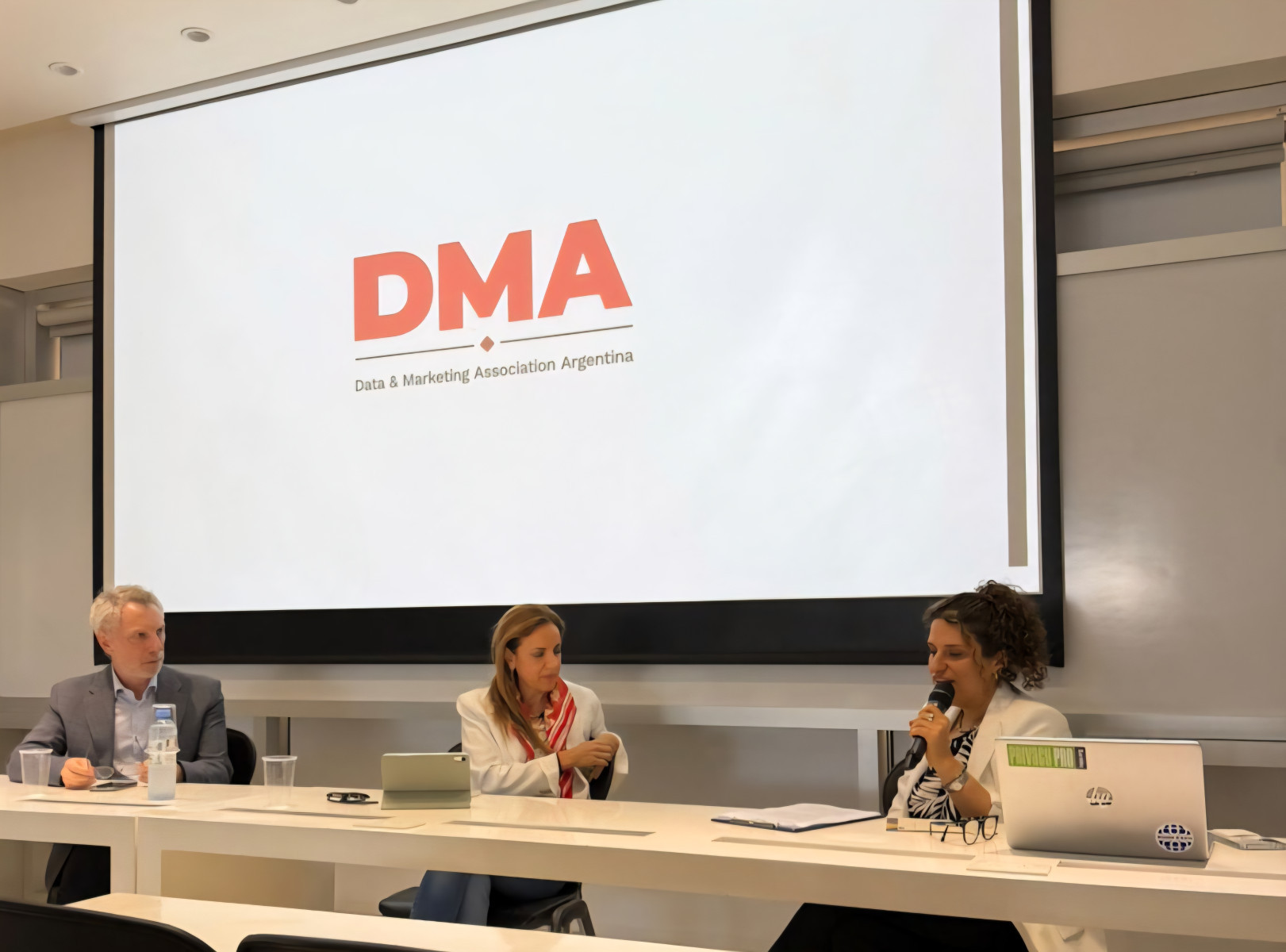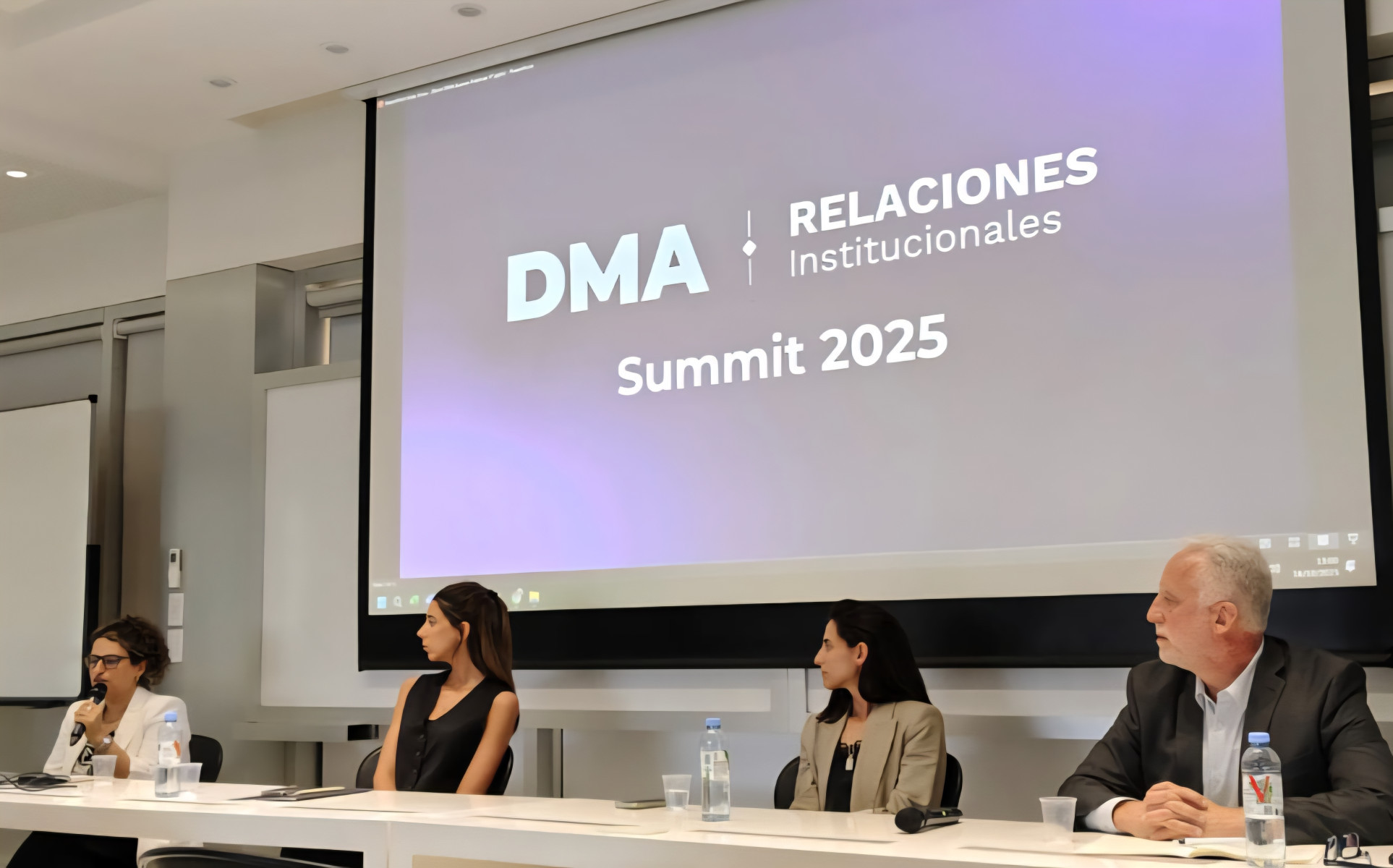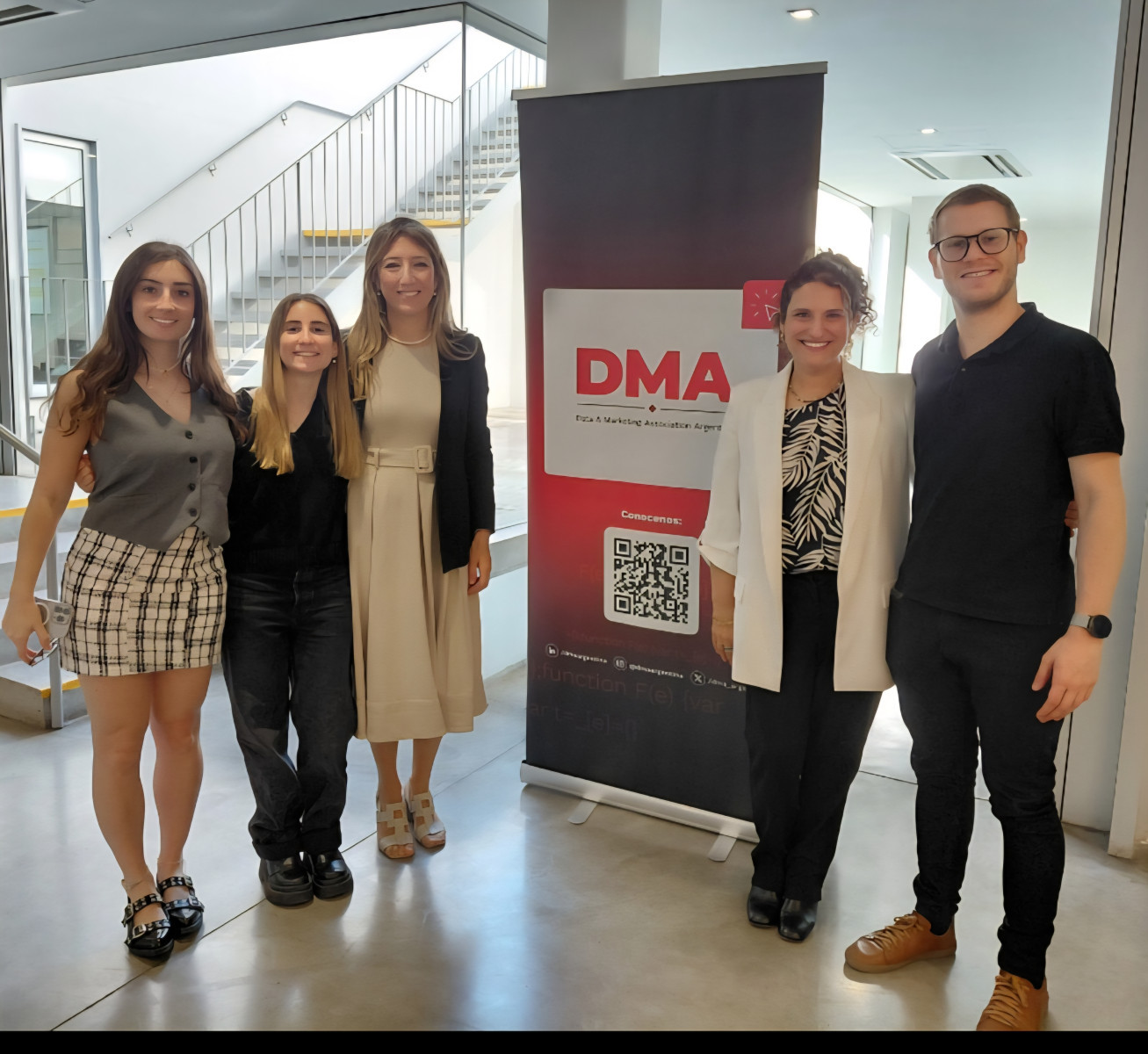
On October 16, a new edition of the DMA Summit was held at the University Torcuato Di Tella to reflect on the challenges posed by Artificial Intelligence and privacy in the digital ecosystem, from a marketing perspective.
The event was organized by the DMA’s Institutional Relations Commission of which our partner Gabriela Szlak is a member, gave Gabriela the opportunity to moderate a panel together with Gustavo Koblinc, president of the DMA, in which Beatriz de Anchorena, head of the Access to Public Information Agency (AAIP), participated as speaker. She then also moderated another pane on best practices l, with the participation of Magdalena Sarquis, Global Legal Manager at Aleph; Delfina Calabró, Regional Legal Manager at Pomelo; and Enrique Pugliano, Senior Corporate Counsel at Equifax.
The event also featured other high-quality panels with experts from the legal and academic fields. This made it possible to share different learnings, perspectives, and practices throughout the day.
Main topics of the panel with Beatriz de Anchorena
During this panel, in addition to mentioning some of the projects carried out by the AAIP, Argentina’s leadership in data protection and its international role were discussed, highlighting that since November 2024, the country has chaired the Committee of Convention 108+, which is about to enter into force, being the first country outside the European Union (EU) to hold that position.
Regarding regulatory convergence, it was stated that Latin America needs its own data protection paradigm. It was mentioned that Brazil is close to obtaining the EU adequacy decision and that mutual recognition with Argentina could take place.
Main topics of the best practices panel
It was discussed how different companies integrate privacy into their organizational structure, and there was agreement that data protection is a strategic and cross-cutting framework, not an operational limitation.
All speakers also agreed on the importance of an interdisciplinary approach among legal, IT, and marketing teams, which allows for building trust among users and clients.
The relevance of applying Privacy-by-Design policies, impact assessments, data governance programs, and human oversight mechanisms in the use of Artificial Intelligence was also addressed. Practices such as anonymization, data minimization, and input control in automated models were mentioned.
Finally, the following recommendations were included:
- Incorporate privacy into organizational culture, starting from senior management.
- Train all teams on what constitutes personal data and how to protect it.
- Use clear and accessible language in policies and notices.
- Define roles and responsibilities in contracts.
- Promote transparency as an element of trust and competitive advantage.
Participation in this event allowed us to take away ideas to continue thinking about privacy as part of the DNA of organizations and about how to build an organizational culture that fosters the ethical, responsible, and sustainable use of technology and personal data, to enhance competitiveness and generate trust.